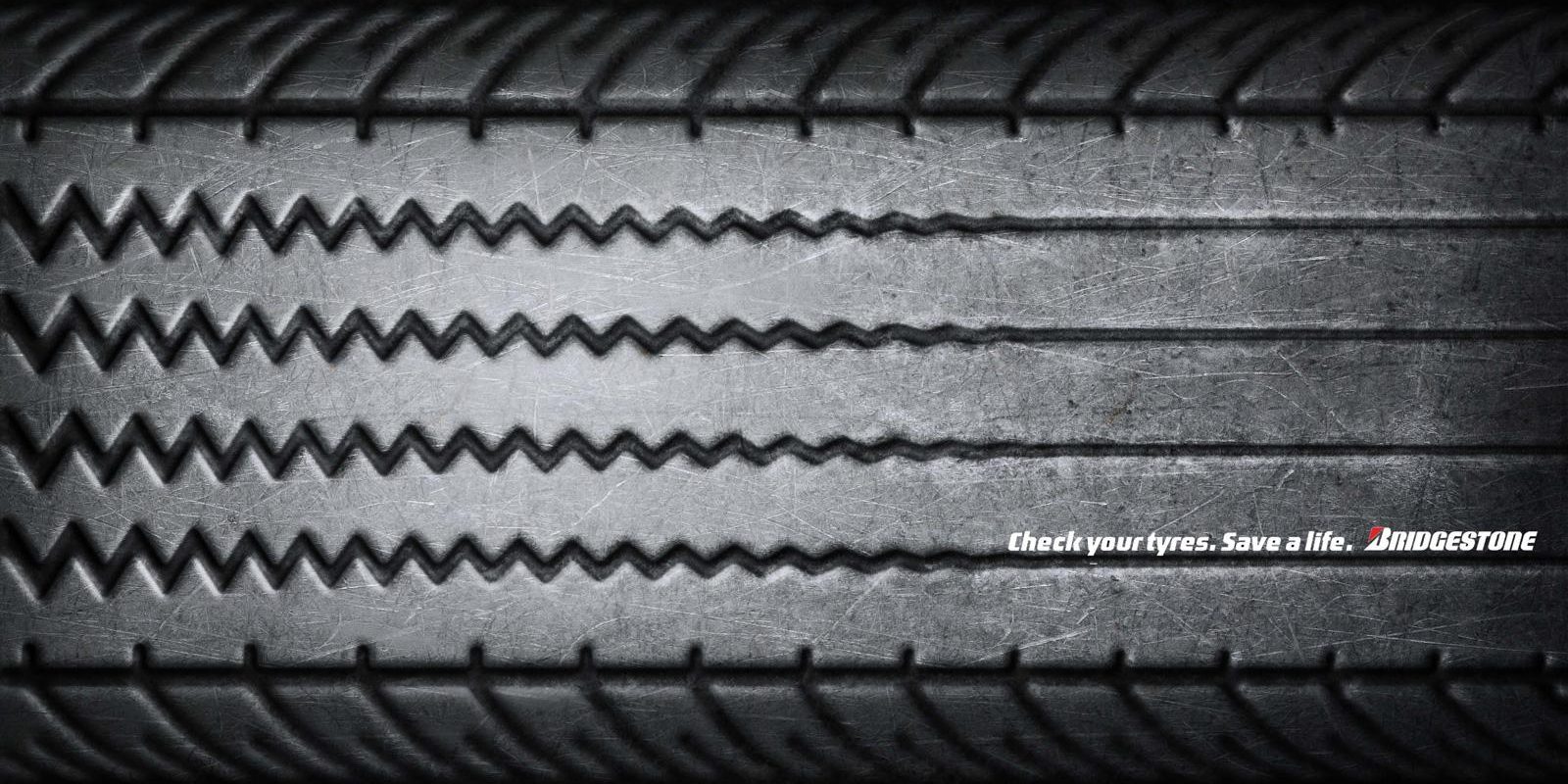
Just as vehicles, drivers, and driving habits are different from each other, not all tires are the same and they can wear at very different rates. For instance, high performance tires for sports cars wear more quickly than touring tires for a family sedan. However, a variety of factors can cause a tire to wear out sooner than expected, and/or cause it to wear irregularly and create noise or vibration. Two common causes of early tire wear out and irregular tire wear are improper inflation pressure and out-of-spec alignment conditions.
TIRE TREAD WEAR CAUSE 1: IMPROPER INFLATION PRESSURE
When a tire is improperly inflated, there’s a good chance it will start to wear more rapidly and/or unevenly. Proper inflation pressure helps optimize distribution of vehicle load, acceleration, braking, and cornering forces in the tread. If the tire pressure is too low, or even too high, the contact patch of the tire tread is not optimized to handle the wide variety of jobs it is asked to do.
Check the pressure in all of your tires, including the spare, every month. You can find the vehicle manufacturer’s tire pressure specifications on a placard/label affixed to the driver’s door or along the door jam.
TIRE TREAD WEAR CAUSE 2:
Tire alignment, also known as wheel alignment, refers to the adjustment of the vehicle’s steering and suspension components – the system that connects and controls the motion of the wheels. The key to proper alignment is to adjust the angles of the tires and their contact with the road in accordance with the vehicle manufacturer’s specifications for parameters such as camber, toe, and caster

Heel/toe tire wear: This happens when one side of the tread blocks is wearing faster than the other side circumferentially. When you run your hand over the tread blocks, they will feel like saw teeth. Heel/toe wear typically occurs in a shoulder rib and is often caused by excessive positive or negative toe.

Feather edge tire wear: Tires are “feathered” when the tread ribs are worn lower/smoother on one side and higher/sharper on the other. This is often caused by a combination of improper alignment settings, such as excessive toe and caster.
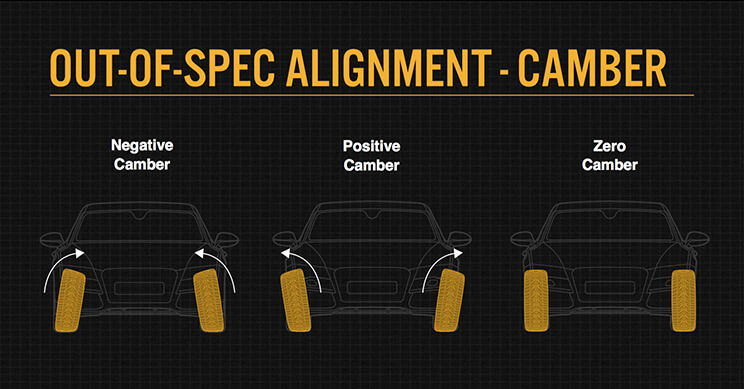
One-sided shoulder tire wear: This type of irregular tread wear means the inside or outside shoulder rib of the tread is significantly more worn than the other ribs. Also known as camber wear, excessive positive or negative camber often causes this type of wear.